

Prostate cancer surgery has taken another leap forward, moving beyond the traditional multi-incision approach. In a groundbreaking procedure, surgeons in South Korea have successfully removed a prostate using a single 3.5-centimeter incision below the navel. This innovative technique promises to reduce post-operative discomfort, minimize scarring, and potentially accelerate patients’ return to their daily routines.
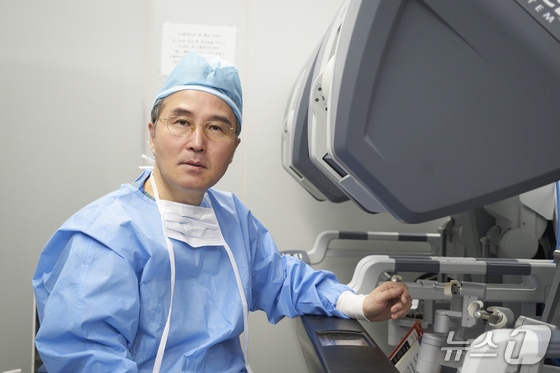
On Friday, Bundang CHA Hospital, affiliated with CHA University, announced a surgical milestone. A team led by Dr. Park Dong-soo successfully performed a Pure Single Port Robotic Radical Prostatectomy using a single 3.5-centimeter incision below the navel, eliminating the need for any auxiliary incisions.
Conventional robotic prostate cancer surgeries typically require multiple abdominal incisions to accommodate robotic arms and surgical instruments. While single-port robotic surgery has evolved to use one primary incision, many procedures still relied on an additional auxiliary incision on the lower abdomen for instrument manipulation.
Dr. Park’s team has refined this approach, completing the entire prostatectomy through a single incision. This method distinguishes itself from both multi-port surgeries and single-port procedures that require auxiliary incisions, marking a significant advancement in minimally invasive techniques.
The area below the navel is known for its relatively sparse nerve distribution, making it an ideal site for minimizing post-operative pain. Compared to traditional multi-incision methods or those requiring auxiliary cuts, this pure single-port approach significantly reduces both the duration and intensity of post-operative discomfort.
Moreover, by performing the surgery in the extraperitoneal space rather than through the abdominal cavity, this technique promotes faster recovery of bowel function. It also inherently lowers the risk of common post-operative complications such as wound infections and hernias.
The single incision below the navel not only minimizes visible scarring but also reduces overall surgical site discomfort. These benefits extend beyond the primary goal of cancer treatment, addressing quality of life concerns and potentially expediting patients’ return to their daily routines.
This surgical innovation represents more than just a reduction in incision size; it signifies a paradigm shift in robotic surgical approaches. However, it’s important to note that this technique isn’t universally applicable to all prostate cancer cases. Factors such as tumor location and size, as well as individual patient anatomy, must be carefully considered when determining the most appropriate surgical method.
Dr. Park emphasized that the primary objective of pure single-port surgery is to minimize pain and accelerate recovery. While acknowledging the technical challenges, he stressed that this patient-centered approach aims to reduce discomfort and scarring, ultimately helping patients return to their normal lives as quickly as possible.