

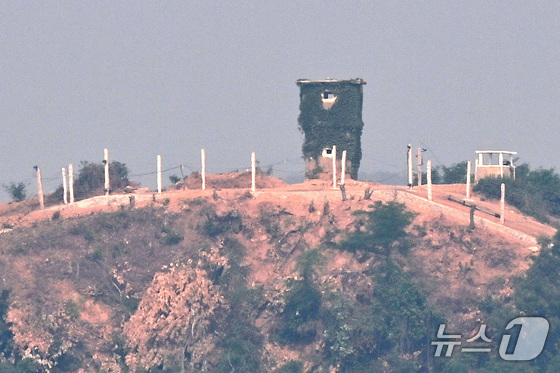
On the afternoon when the South Korean government halted its loudspeaker broadcasts towards North Korea, North Korea swiftly responded by either stopping its broadcasts to the South or significantly reducing the volume, replacing the bizarre noises with music.
Military sources and border area residents reported on Thursday that, immediately after South Korean forces ceased their loudspeaker broadcasts at 2 PM on Wednesday, North Korea made instant changes to its propaganda broadcasts in border regions, such as Paju and Ganghwa.
According to Ganghwa County officials, North Korea’s broadcasts, which had been blaring animal sounds and metal-grinding noises every night, switched to music starting the previous afternoon. The overall noise levels also decreased noticeably.
In Songhae-myeon, Ganghwa County, the situation had been so severe that 35 households across two villages installed soundproof windows. The broadcasts typically reached noise levels between 76 and 81 decibels (dB).
A Ganghwa County representative stated that they’ve been receiving reports from residents that the broadcasts, usually starting around 10 PM, have changed since yesterday. The locals attribute this to our government’s decision to stop broadcasts to the North.
Residents in Paju’s civilian control zone, another border area, also reported that the North’s broadcasts, which had been severely disrupting their daily lives, ceased as of yesterday afternoon.
Kim Dong Gu, the head of Daeseong-dong village, reported that the nightly broadcasts that have been tormenting the residents suddenly stopped. The residents express a sense of relief, saying they can finally live their lives normally again.
Daeseong-dong is the civilian settlement closest to the North’s loudspeakers within the Demilitarized Zone.
However, military authorities have not officially confirmed whether the broadcasts from Paju were completely halted or merely reduced in volume, similar to those in Ganghwa.
On Thursday, the second day after South Korea ceased its broadcasts, residents of the Paju border reported that they were no longer hearing the North’s broadcasts, which typically ran from around 6 AM to 10 AM.
A Paju city official welcomed the North’s swift response, stating that while this immediate reaction to the government’s decision is positive, it could be temporary. He expressed hope that the government can quickly engage in talks with North Korea to secure a formal agreement on stopping these broadcasts.
On June 9 last year, under Yoon Suk Yeol’s administration, South Korea resumed loudspeaker broadcasts after a six-year hiatus in response to North Korea’s balloon propaganda. North Korea retaliated by starting its own broadcasts in July. Notably, North Korea’s broadcasts included disturbing sounds like metal scraping and eerie animal noises, which have been tormenting border residents for nearly a year.