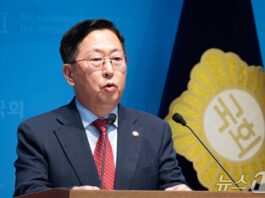
On Wednesday, analysts noted that the recent dispute between the U.S. and South Korea over North Korea’s nuclear facilities in Kusong has ultimately led to the official recognition of a third nuclear site that the two allies had previously discussed privately. The U.S.’s unusually sensitive reaction to South Korean Minister Chung Dong-young’s public statements about the facility effectively confirmed its existence.
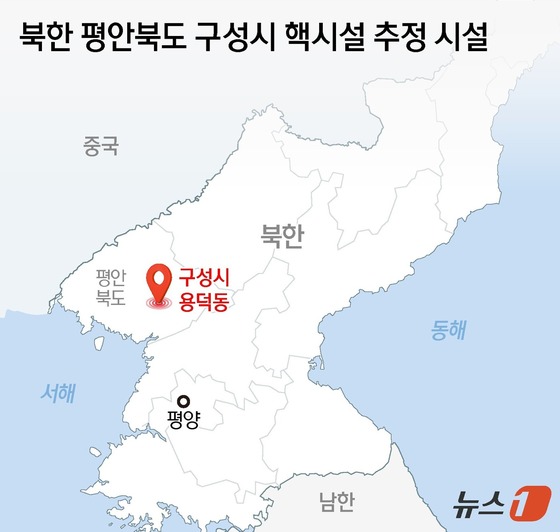
Kusong City, situated roughly 100 km (about 62 miles) northwest of Pyongyang, is only about 50 km from Yongbyon, North Korea’s first major nuclear complex. U.S. and South Korean intelligence agencies have long suspected that North Korea is establishing a third nuclear hub here, following Yongbyon and the facility in Gangseon, Nampo.
Of particular interest is Yongdeok-dong in Kusong City, an area densely packed with military-industrial facilities and factories, making it a prime location for the suspected third nuclear site.
The Strategic Significance of Kusong: Merging Manufacturing Prowess with Nuclear Capability
Before its notoriety as a potential nuclear site, Kusong was renowned as a major military-industrial center in North Korea. Intelligence agencies have reportedly focused on this area due to its advanced precision machining capabilities.
The centrifuges crucial for uranium enrichment demand designs capable of withstanding high-speed rotations and sophisticated component manufacturing techniques, capabilities believed to be present in Kusong. Key facilities mentioned include the Kusong Machine Manufacturing Plant, Kusong Mining Machinery Plant, and Kusong Textile Factory.
In 2016, the Institute for Science and International Security (ISIS) reported that satellite imagery analysis had detected signs of centrifuge operations in underground facilities around Kusong, indicating ongoing uranium enrichment activities.
Moreover, in February 2021, satellite imagery from Maxar Technologies, analyzed by the Middlebury Institute of International Studies, revealed the construction of concealment structures at the entrance of the Yongdeok-dong facility, believed to be a nuclear weapons storage site. This effort to evade U.S. and South Korean intelligence further suggests the site’s critical importance as a core nuclear facility.
Experts believe that while Yongbyon has long been exposed to the outside world and serves as a showcase facility for propaganda and negotiations, Kusong likely functions as a covert nuclear production base for practical use. The movement of large vehicles detected at the entrances of underground tunnels in the area has raised suspicions about the potential transportation of new centrifuges or nuclear fuel sealing operations.
The Center for Strategic and International Studies (CSIS) published a three-part report last April and May through its North Korea-focused platform, Beyond Parallel, titled, Yongdeok-dong High-Performance Explosive Testing Facility. Victor Cha, who contributed to the report, confirmed that the research focused on nuclear detonator tests conducted in Yongdeok-dong.
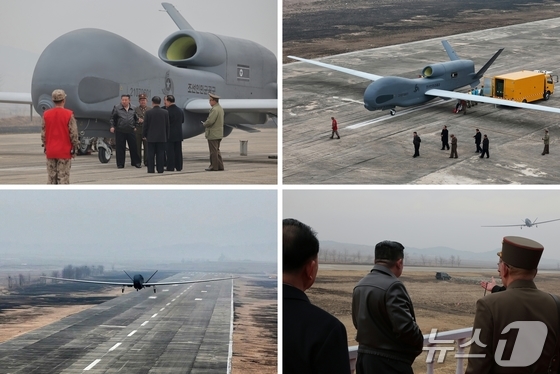
Banghyeon Air Base: A Key Hub for North Korea’s UAV Program
Beyond Parallel reported last month that satellite imagery confirmed the presence of strategic unmanned aerial vehicles (UAVs), Saetbyeol-4 and Saetbyeol-9, positioned near the runway at Banghyeon Air Base near Kusong. This discovery suggests that Banghyeon Air Base serves as a critical UAV base for North Korea.
The Saetbyeol-4 is a high-altitude long-endurance reconnaissance UAV that bears a striking resemblance to the U.S. RQ-4 Global Hawk. The Saetbyeol-9, on the other hand, is a medium-altitude long-endurance attack UAV, similar in appearance to the U.S. MQ-9 Reaper.
Furthermore, there are indications that North Korea is constructing a low-cost drone production facility in Kusong, potentially leveraging experience gained from the Ukraine conflict. The U.S. North Korea-focused platform 38 North reported last month that satellite imagery analysis supports this observation. Kusong appears to be emerging as a new strategic hub for the North Korean military, now equipped with UAV manufacturing capabilities alongside its nuclear facilities.