Ukrainian President Volodymyr Zelenskyy has claimed that Russia is seeking an additional 30,000 North Korean troops to support its war in Ukraine, fueling renewed speculation about Pyongyang’s potential military involvement.
While North Korea has already sent an estimated 20,000 personnel to Russia, analysts say deploying another 30,000 troops directly to the front lines appears unlikely. Instead, any additional deployment would more likely focus on rear-area security and homeland defense, particularly following North Korean Foreign Minister Choe Son Hui’s recent visit to Moscow.
In a video address posted on social media on July 25, Zelenskyy said Russia wants North Korea to dispatch another 30,000 troops and has been preparing facilities in Russia’s Voronezh region to receive them since June. He also claimed Ukraine had detected signs that North Korea could provide additional transporter erector launchers (TELs) for missile systems.
Voronezh, located in southwestern Russia near the Ukrainian border, serves as a key transportation and logistics hub connecting to major battlefronts in Donbas and Kursk. It also functions as a rear-area ammunition depot for artillery shells and ballistic missiles destined for the front.
According to Ukraine’s Defense Intelligence Directorate (HUR), North Korea’s first deployment in October 2024 also passed through Voronezh before moving toward the Kursk front.
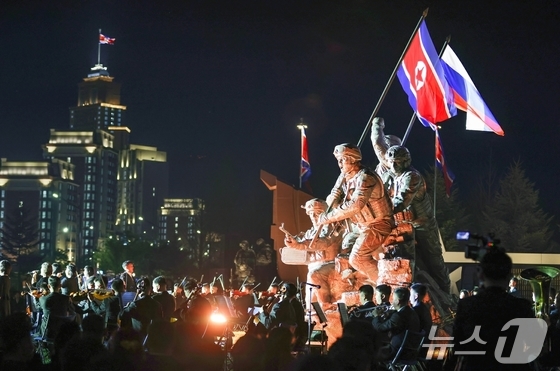
North Korean leader Kim Jong Un and Russian President Vladimir Putin signed a mutual defense treaty during their summit in Pyongyang in June 2024. North Korea subsequently began deploying troops to Russia in October of that year.
To date, approximately 20,000 North Korean personnel—including combat troops and engineering units—are believed to have been sent to the Kursk region. Estimates suggest that around 14,000 North Korean troops remained stationed there as of early this year.
Military experts caution that Zelenskyy’s claim of another 30,000 troops being deployed directly into frontline combat is unlikely, citing North Korea’s own defense requirements and limited capacity to sustain such a large overseas deployment.
Officials have also said there have been no unusual signs, such as large-scale troop movements, that would corroborate Zelenskyy’s claims.
Nevertheless, analysts believe Zelenskyy’s renewed warning may have been influenced by Choe Son Hui’s recent visit to Moscow.
During their meeting on July 18, Putin thanked North Korea’s leadership for its support of Russia’s war effort. Ukrainian officials may interpret the meeting as a sign that military cooperation between the two countries is continuing to deepen.
Analysts also note that North Korea could still increase military support in exchange for advanced Russian military technologies, including nuclear submarine reactor technology or assistance with nuclear warhead miniaturization.
Even if additional personnel are deployed, they would likely consist primarily of conventional infantry rather than elite special forces, with missions focused on homeland defense and rear-area security inside Russia.
Some North Korean troops sent in December 2024 were reportedly assigned to rear-area positions rather than direct combat, allowing Russian forces to concentrate on offensive operations closer to the front.
“Because the treaty between North Korea and Russia is framed as a mutual defense agreement, it is unlikely Pyongyang would send large numbers of troops directly into active combat zones,” said Yang Uk, a research fellow at the Asan Institute for Policy Studies.
“However, North Korea could agree to send personnel to operate long-range artillery or short-range missile systems capable of supporting Russia from within its own territory, or provide additional troops for rear-area security in exchange for military technology transfers,” he said.