

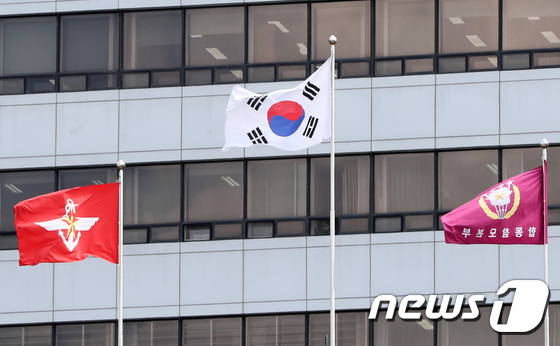
In recent weeks, the significance of cognitive warfare, which aims to disrupt public sentiment in adversary nations, has come to the forefront during U.S. and Israeli airstrikes against Iran. In response, South Korea and the U.S. have conducted their first joint simulation exercise to bolster their capabilities in this crucial area. Cognitive warfare involves the strategic use of online platforms, electronic devices, and traditional media to inject false information into an adversary’s leadership or public, potentially causing decision-making errors and instilling a sense of defeat and fear.
According to South Korean and U.S. military officials on July 12, a Government Agency Linked Strategic Communication Response Tabletop Exercise (TTX) was held on the 9th at the Joint Chiefs of Staff headquarters in Yongsan, Seoul. The exercise was led by the Joint Chiefs of Staff and included participation from U.S. Forces Korea, the South Korea-U.S. Combined Forces Command, and the United Nations (UN) Command.
The exercise saw broad participation from various South Korean government agencies, including the Ministry of National Defense, Ministry of Foreign Affairs, Ministry of Culture, Sports and Tourism, Ministry of Science and Information and Communications Technology (ICT), Korea Communications Commission, National Intelligence Service, and National Police Agency.
U.S. Forces Korea characterized the exercise as the first comprehensive, integrated, multinational, and multi-agency training focused on synchronizing operations within the information environment. The TTX was designed to assess complex threat scenarios across multiple domains and develop effective response strategies for national crisis situations.
During the tabletop exercise, South Korean and U.S. forces concentrated on three key areas: countering foreign disinformation, synchronizing responses to multi-domain threats (including cyber, space, and electromagnetic spectrum) from allied forces and partner nations, and coordinating strategic communication efforts.
U.S. Forces Korea assessed that the exercise successfully enhanced the joint defense posture and contributed to establishing a practical cooperation system for future combined operations. They emphasized that ensuring the South Korea-U.S. alliance can exert decisive influence in the information environment, alongside multilateral partners, remains a strategic priority.
The importance of cognitive warfare capabilities in modern conflict was underscored earlier this year during the Middle Eastern conflict that began in February. Reports indicate that Israel hijacked Iranian state broadcasts to disseminate propaganda messages, while the U.S. allegedly hacked an Iranian prayer Applelication, Badassaba Calendar, to promote activities aimed at destabilizing the Iranian government. These incidents highlight the growing significance of both offensive and defensive cognitive warfare capabilities in contemporary military operations.