The upcoming U.S.-South Korea joint exercise, Ulchi Freedom Shield (UFS), will focus on enhancing operational capabilities across all domains, including nuclear, conventional, information, cyber, and space. The United Nations Command (UNC) is also exploring ways to leverage the specialized capabilities of member nations in these emerging domains to counter evolving threats identified in conflicts like Ukraine and the Middle East. This initiative aims to bolster multinational coalition operational support capabilities.
In a joint press release on Monday, U.S. and South Korean officials announced that the UFS exercise will be conducted from August 17 to 27.
Both nations emphasized that this year’s UFS incorporates realistic scenarios based on recent conflict analyses, serving as a crucial opportunity to strengthen the combined defense posture of the U.S.-South Korea alliance, including joint operations across all domains.
This year’s UFS will see participation from 70 personnel representing 11 UNC member nations. These participants will train alongside existing UNC staff, examining how to integrate their specialized capabilities in information warfare and cybersecurity into the actual combined defense system.
Senior diplomatic and military representatives from UNC member nations will also observe the exercise, sharing insights on decision-making processes and response protocols for crisis situations. The Neutral Nations Supervisory Commission will monitor compliance with the armistice agreement throughout the exercise.
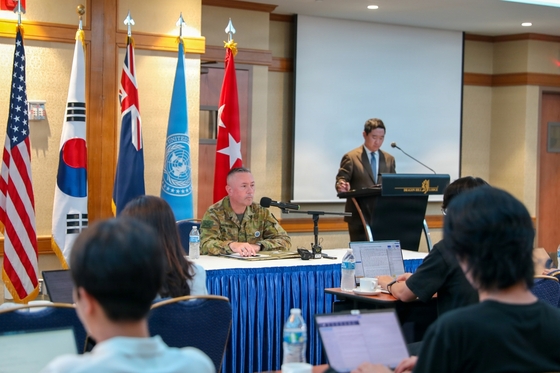
Addressing these developments, UNC Deputy Commander Lt. Gen. Scott Winter expressed keen interest in how the UNC can support operations in emerging domains like information, cyber, and space during a press briefing with defense reporters on August 6.
Winter stated that this presents a critical opportunity for us to evolve the capabilities, adding that the strategic direction will be determined based on identified needs through close consultations with South Korean partners.
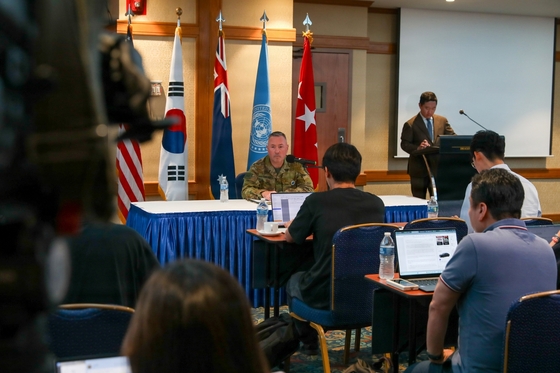
The Strongest Deterrent Message is Standing United Against Aggression
The UNC has long played a pivotal role in enforcing the armistice agreement and coordinating military power among member nations during crises. In the event of conflict, the UNC would be responsible for integrating troops, medical support, and logistical assistance provided by member nations into the defense framework of the Korean Peninsula.
Winter also underscored the need to prepare for evolving threats, citing the deployment of North Korean troops to Russia and their potential experiences in the Ukraine conflict.
He noted that they’re aware that North Korean personnel likely participated in the Ukraine conflict and may have brought back valuable lessons, emphasizing that they are leveraging every training opportunity to prepare for emerging threats observed in conflicts like those in Ukraine and Iran.
Winter further explained that the primary goal is to ensure seamless interoperability across all domains.
Reflecting on lessons from the Ukraine war, Winter cautioned that deterrence can fail, and it must invest in hard power capabilities and multilateral resolve, adding that there’s no substitute for readiness.
Winter invoked the U.S.-South Korea alliance’s mottos, Katchi Kapshida (We Go Together) and Fight Tonight, alongside the UNC’s motto, Under One Flag, emphasizing that the most powerful deterrent message is the united stand of like-minded nations against aggression.
While the UNC won’t directly participate in field training exercises (FTX) during this UFS, it will conduct headquarters-level training to refine communication systems, coordination procedures, and crisis management protocols. This includes practicing the integration of reinforcement forces from member nations in emergency scenarios.
Winter concluded that as threats continue to evolve, it cannot afford to remain static. Interoperability remains a cornerstone focus in every exercise it conducts on the Korean Peninsula.