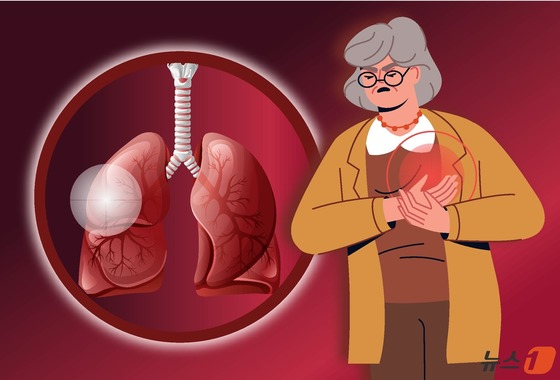
Winrevair (generic name sotatercept), a groundbreaking treatment for pulmonary arterial hypertension, has emerged as the first new mechanism in nearly two decades and is rapidly gaining traction in clinical settings worldwide. Major nations, including the U.S., European countries, and Japan, have already incorporated it into their public health insurance coverage. Meanwhile, efforts are underway in South Korea to enhance patient access to this innovative therapy.
Industry insiders reported on Wednesday that Korea MSD has submitted an application for Winrevair to be included in the Ministry of Health and Welfare’s Fast-Track Registration Pilot Program for Rare Disease Treatment on Monday. If selected, the drug could see a significantly expedited health insurance registration process, though a decision is still pending.
Winrevair, approved in South Korea last July, is designed to be used in combination with existing therapies to improve exercise capacity in adult patients with pulmonary arterial hypertension. It received U.S. Food and Drug Administration (FDA) approval in the United States in March 2023 and has since expanded its approval and coverage to various countries across Europe and Japan. As of January 31st, it has been listed for coverage in 25 countries, including the A8 nations.
Pulmonary arterial hypertension is a rare and severe condition characterized by abnormally high pressure in the pulmonary arteries, which transport blood from the heart to the lungs. As the disease progresses, it narrows the pulmonary vessels, increasing strain on the heart and potentially leading to right heart failure or death. Without treatment, the average life expectancy is alarmingly short, at approximately three years.
What sets Winrevair apart is its unique mechanism of action, which differs from conventional pulmonary arterial hypertension treatments. Traditional therapies have primarily focused on dilating pulmonary arteries by regulating pathways involved in blood vessel contraction and relaxation.
Winrevair, however, targets the activin signaling pathway, which plays a role in the abnormal proliferation of vascular cells observed in pulmonary arterial hypertension. Rather than replacing existing treatments, it complements them by introducing a new mechanism to reduce the risk of disease progression.
Clinical trials have demonstrated Winrevair’s efficacy in mitigating disease progression. A study involving adult pulmonary arterial hypertension patients showed that adding Winrevair to existing treatment regimens reduced the risk of clinical deterioration, including mortality, by an impressive 84% compared to the control group.
Internationally, Winrevair is being rapidly incorporated into treatment guidelines following its approval. Key countries such as the United States, European nations, and Japan are now utilizing it as a novel treatment option for pulmonary arterial hypertension. This addition of an alternative approach to the traditional vasodilator-centered treatments has significantly expanded the therapeutic options available to patients.
In South Korea, following its approval by the Ministry of Food and Drug Safety last July, procedures for health insurance coverage are ongoing. Winrevair has been selected for the Ministry’s Global Innovative Product Fast Track Review System (GIFT) and is also included in the Concurrent Approval-Assessment-Negotiation Pilot Program, which allows for simultaneous approval and pricing negotiations.
Korea MSD has also applied to participate in the Fast-Track Registration Pilot Program for Rare Disease Treatments. This initiative prioritizes health insurance registration for rare disease treatments, acknowledging the challenges in confirming long-term clinical outcomes within a short timeframe. It allows for initial coverage followed by post-market evaluations based on real-world clinical results. The government aims to dramatically reduce the health insurance registration period from the current 240 days to a maximum of 100 days through this program.
The Ministry of Health and Welfare plans to conduct a comprehensive review of the applied medications, considering factors such as disease severity, availability of alternative treatments, potential impact on health insurance finances, and post-market evaluation plans. They intend to select up to five medications for the program, with results expected to be announced as early as this month.