

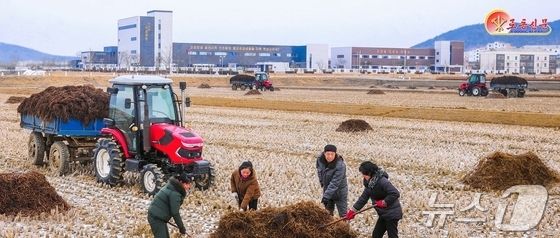
North Korea continues its efforts to locate and transform barren land into arable farmland. This initiative aims to expand cultivable areas and boost food production, underscoring the persistent chronic food shortages plaguing the nation.
On February 1, the ruling party’s mouthpiece, Rodong Sinmun, published an article titled, Let’s Uncover All Idle and Hidden Land. The piece emphasized that in a country with limited arable land, it’s crucial to increase grain yields through scientific farming methods while maximizing the expansion of cultivated areas.
The newspaper highlighted ongoing reclamation projects along the west coast, touting last year’s success in Dancheon city, where a campaign to plant 1,000 crop stalks on newly discovered land yielded positive results.
While acknowledging that the search for new land has been ongoing, the paper urged agricultural workers to redouble their efforts. It stated that by reclaiming reed fields, clearing stone piles, and straightening rice paddy ridges, we can uncover ample land for crop cultivation.
The article framed the process of finding unused land and planting even a single additional crop as a vital opportunity to foster patriotism among the masses. It asserted that true patriotic farmers should not overlook even an inch of land if it could contribute to filling the nation’s granaries. This rhetoric deliberately links land reclamation efforts to patriotism, reinforcing the legitimacy of these initiatives.
Since the era of Kim Il Sung’s leadership, North Korea has spearheaded a nationwide new land search movement. This campaign has involved reclaiming tidal flats and developing hillsides into farmland to boost grain production. The country has particularly focused on large-scale reclamation projects in North and South Pyongan provinces and along the west coast for decades.
North Korea’s continued fixation on finding new land likely stems from unresolved chronic food shortages. The United Nations Food and Agriculture Organization (FAO) has designated North Korea as a country requiring external food assistance for 19 consecutive years since 2007.
Some analysts speculate that following the implementation of the Local Development 20X10 Policy in 2024, there may be an increased demand for agricultural products to supply raw materials for newly established local industries across various regions.