

As electric vehicle (EV) adoption accelerates, the demand for batteries with shorter charging times is surging. In response, a domestic research team has developed groundbreaking ultra-fast charging technology that can fully charge a battery in just 12 minutes.
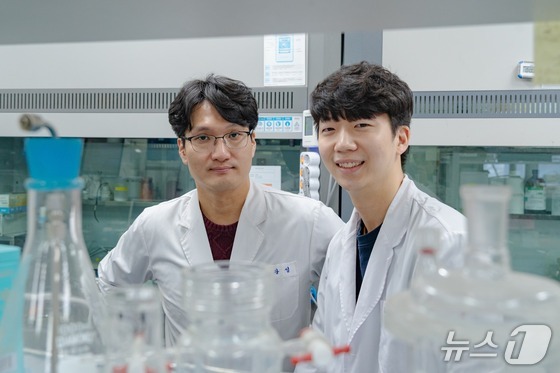
The Gwangju Institute of Science and Technology (GIST) announced on Wednesday that a research team led by Dr. Uhm Kwang-Seop, director of the Next Generation Energy Research Institute and professor in the Department of Materials Science and Engineering, has developed a technology to significantly enhance the charging speed and stability of lithium metal batteries.
Lithium metal batteries, hailed as the next generation of energy storage, can theoretically achieve energy densities approximately twice that of conventional lithium-ion batteries. However, they face a critical challenge: during charging and discharging cycles, the formation of lithium dendrites severely compromises the battery’s lifespan and safety.
The research team tackled the problem of uneven lithium deposition on the anode surface, which results in sharp, branch-like formations. They engineered an innovative three-dimensional structure that promotes uniform lithium deposition from within.
This breakthrough has yielded impressive results. The energy storage density now surpasses that of conventional lithium-ion batteries by more than twofold, and charging speeds have been drastically improved, enabling full charging in a mere 12 minutes.
Unlike traditional copper-based lithium anodes or typical porous structures, which experience a sharp decline in performance after about 80 charge-discharge cycles, the newly designed structure maintained an impressive 94.7% of its initial capacity even after 200 cycles.
Remarkably, the team observed no volume expansion during the charge-discharge process, demonstrating exceptional stability even under fast-charging conditions.
Dr. Uhm emphasized the potential impact of this technology, stating that if lithium metal batteries with more than double the energy storage density of current lithium-ion batteries are commercialized, it could see a dramatic increase in the driving range of EVs and air mobility solutions, along with the ability to charge these vehicles in just 12 minutes.
The groundbreaking research, led by Dr. Uhm and conducted by lead author Dr. Cho Jin-hyun, was published online on March 29 in the prestigious international journal Energy & Environmental Materials, a leading publication in the field of materials science and energy.
For inquiries regarding technology transfer, interested parties should contact the Technology Commercialization Office at GIST.