

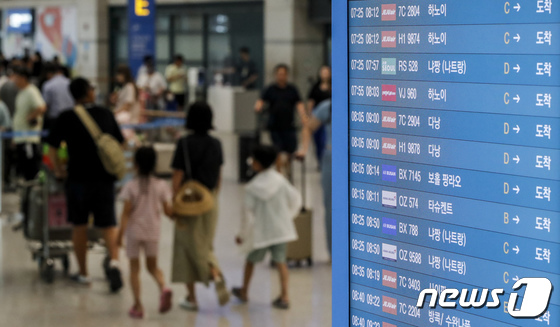
Dengue fever cases are rapidly increasing in Vietnam. With the number of patients exceeding 30,000 in the first quarter of this year and Vietnamese health authorities issuing an official warning about the spread, heightened caution is required for travelers visiting the country.
According to the Korea Disease Control and Prevention Agency on April 27, as of March 27, the number of dengue cases reported in Vietnam reached 31,927, with four deaths. This marks a 2.2-fold increase compared with 14,467 cases and four deaths during the same period last year.
By region, the southern area accounted for the largest share of cases. Ho Chi Minh City reported the highest number with 14,467 cases (43%), followed by Tay Ninh with 3,331 cases (10.4%), Dong Nai with 2,172 cases (6.8%), Dong Thap with 1,900 cases (6.0%), An Giang with 1,890 cases (5.9%), Can Tho with 1,815 cases (5.7%) and Vinh Long with 1,711 cases (5.4%).
The concern is that the spread is likely to continue. Vietnam’s Ministry of Health has warned that dengue cases are rising in some regions and infections could continue to increase.
According to the agency, dengue is endemic in Vietnam, with the number of cases typically rising during the rainy season from May to November.
However, in recent years, a combination of factors including rising temperatures, irregular rainfall, rapid urbanization, high population density and water storage in residential areas has led to year-round outbreaks, making the timing of infections harder to predict.
The number of cases has also shown a sharp increase in recent years. From Dec. 14, 2024, to Dec. 17 last year, 181,237 dengue cases and 43 deaths were reported, marking a 33% increase compared with the same period a year earlier, with 17 additional deaths.
A key issue is that there is still no effective vaccine or treatment for dengue.
Dengue is an infectious disease transmitted through bites from infected mosquitoes, including Aedes aegypti and Aedes albopictus. After an incubation period of five to seven days, symptoms such as fever, headache, chills and muscle pain appear. With no effective vaccine or treatment available, avoiding mosquito bites remains the only preventive measure.
In particular, the fatality rate increases significantly upon reinfection, requiring extra caution for those with prior infection or those frequently visiting endemic areas.
All reported dengue cases in the country have been imported, with many infections occurring after travel to Southeast Asia. A total of 110 imported cases were reported last year, and 17 cases have been reported as of April 19 this year.
In September 2023, a South Korean national who visited Bangladesh contracted dengue, received treatment locally and died of dengue shock syndrome two days later.
The U.S. Centers for Disease Control and Prevention (CDC) has also taken action. On April 16, the CDC updated its “Travel Health Notice Level 1” list to include 12 countries, including Vietnam, Bangladesh, the Maldives, Colombia and Mali, warning that large-scale dengue outbreaks commonly occur worldwide every two to five years.
For countries under “Travel Health Notice Level 1,” the CDC recommends strict adherence to preventive measures, including using mosquito repellents containing picaridin, managing lodging environments such as installing screens, and minimizing skin exposure by wearing long-sleeved clothing during peak mosquito activity and in high-risk areas.
The Korea Disease Control and Prevention Agency emphasized that those visiting dengue-affected regions should follow preventive measures to avoid mosquito bites and seek medical attention if symptoms such as fever, headache, muscle pain or rash appear after travel, informing medical providers of their travel history.