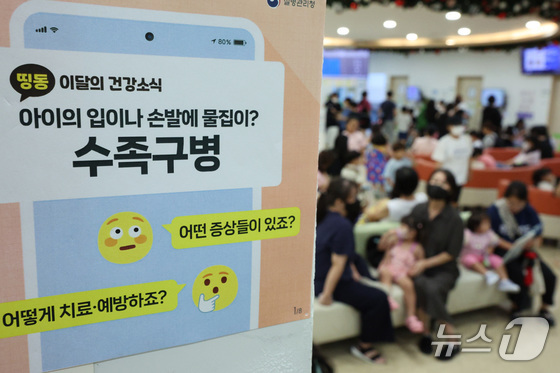
“Half of the children in my daughter’s daycare class have hand, foot and mouth disease. Parents are already saying the season of outbreaks has returned.” (Parent of a 4-year-old child)
As early summer begins, hand, foot and mouth disease (HFMD), a common infectious illness among infants and young children, is showing signs of resurgence. The disease, characterized by blisters on the hands, feet and inside the mouth, typically sees cases rise from May and is one of the most common pediatric infections during the warmer months. Growing numbers of cases at daycare centers and kindergartens have heightened concerns among parents.
According to the Korea Disease Control and Prevention Agency (KDCA) on June 5, the proportion of suspected HFMD cases reached 2.2 per 1,000 outpatient visits during epidemiological week 21 (May 18–24), up 29.4% from 1.7 per 1,000 the previous week. Among children ages 0 to 6, the rate increased from 2.3 to 2.9 per 1,000 outpatient visits, representing a 26.1% week-over-week increase. Over the past four weeks, the rate among young children rose from 1.3 in week 18 to 2.9 in week 21, indicating that transmission is accelerating primarily among infants and preschool-aged children.
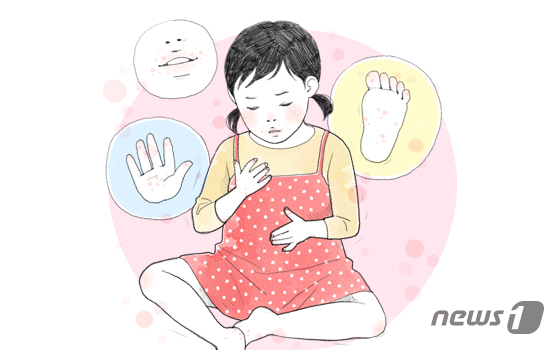
HFMD is an acute viral illness caused by various enteroviruses, including coxsackieviruses and enteroviruses. It primarily affects children under age 5 and is characterized by mouth ulcers and blister-like rashes on the hands and feet. Because multiple virus strains can cause the disease, children may become infected again even after recovering from a previous episode.
Health officials attribute the recent increase in cases to the disease’s high transmissibility. HFMD can spread through respiratory droplets from saliva, mucus and sputum, as well as through direct contact with blisters or contaminated objects such as toys, utensils and door handles. Young children, who often have difficulty maintaining proper hygiene and spend extended periods together in daycare centers and kindergartens, are particularly vulnerable to cluster infections.
Symptoms often begin with cold-like signs. During the first two to three days after infection, patients may develop fever, loss of appetite, sore throat and fatigue. Blister-like rashes then appear in the mouth and on the hands and feet. Mouth ulcers can make it difficult for children to eat or drink, increasing the risk of dehydration and making adequate fluid intake essential. Most patients recover within seven to 10 days without specific treatment, although the disease remains highly contagious for approximately one week after symptoms begin.
However, health authorities caution that severe complications can occur in rare cases.
A KDCA official said HFMD caused by Enterovirus 71 (EV71) can progress to serious conditions including brainstem encephalomyelitis, neurogenic pulmonary edema, pulmonary hemorrhage, myocarditis, pericarditis and shock.
“If a child with suspected HFMD develops a persistent fever above 38 degrees Celsius, becomes lethargic, or experiences vomiting or seizures, parents should seek medical attention without delay,” the official said.
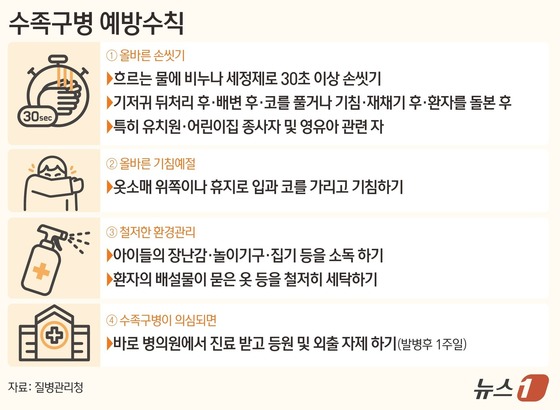
There is currently no vaccine available to prevent HFMD, making personal hygiene the most effective preventive measure. The KDCA recommends washing hands with soap and running water for at least 30 seconds, particularly after changing diapers, handling bodily waste or caring for infected patients.
Health officials also advise regularly disinfecting toys, playground equipment and frequently touched surfaces such as door handles, while thoroughly washing clothing contaminated with bodily waste.
Children suspected of having HFMD should be evaluated by a healthcare provider promptly and avoid attending daycare centers, kindergartens or other group settings.
“Because infectivity remains high for about one week after symptom onset, children should minimize outside activities and remain away from school or daycare until symptoms improve,” the KDCA official said. “Prompt medical evaluation and temporary exclusion from group settings can help prevent further spread.”