

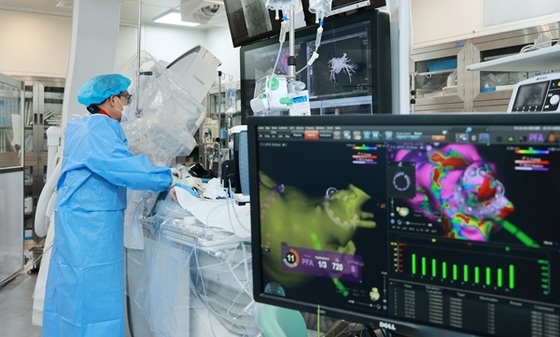
The heart beats through electrical signals for a lifetime. When these signals stray from their normal pathways and become irregular, the heartbeat loses its rhythm. This condition is known as arrhythmia.
Arrhythmia is not simply an irregular pulse. It encompasses a wide spectrum of disorders—from atrial fibrillation to inherited cardiac diseases—and, if left untreated, can lead to life-threatening complications such as stroke or sudden cardiac death. For patients, it is like a ticking time bomb; for clinicians, it represents a highly complex challenge requiring extreme precision.
Korea’s medical community first made a bold attempt to confront this difficult field in 1998, during the IMF financial crisis. At a time when atrial fibrillation was considered incurable and managed only with medication, Korea University Anam Hospital introduced catheter ablation into clinical practice. Led by Professor Young-hoon Kim, a globally recognized arrhythmia specialist and former president of Korea University Medical Center, the hospital pioneered the use of radiofrequency catheter ablation to eliminate abnormal electrical pathways in the heart. This marked a historic turning point that reshaped arrhythmia treatment in Korea and laid the foundation for global standard therapy now adopted worldwide.
This legacy has since evolved, surpassing 10,000 cumulative procedures. The hospital’s Arrhythmia Center, built on a multidisciplinary precision system, has recently introduced multiple types of next-generation pulsed-field ablation (PFA) systems, expanding personalized treatment options and reaffirming its global leadership in the field.
At the center of this advancement is Professor Jong-il Choi of the Department of Cardiology, who leads remote monitoring and AI-based ECG research as well as Korea’s first inherited cardiac disease clinic. The following is a Q&A.
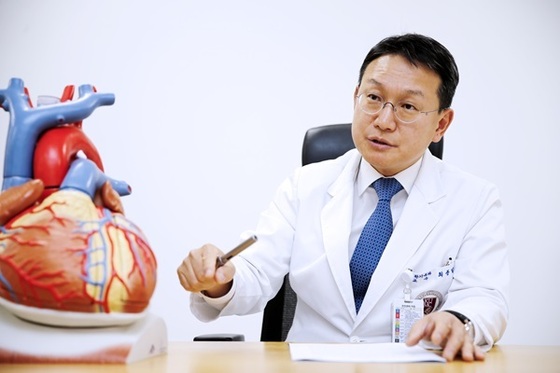
Q. What differentiates the Arrhythmia Center at Korea University Anam Hospital?
The biggest strength of the center is its long clinical experience combined with a systematic treatment framework. Arrhythmia is not a single disease—it ranges from atrial fibrillation and tachycardia to bradycardia, genetic disorders, and sudden cardiac death risk. Based on our experience as the first institution in Korea to perform catheter ablation for atrial fibrillation, we provide a wide range of treatments including 3D mapping-based ablation, pulsed-field ablation, pacemaker and defibrillator therapy, and repeat procedures for recurrent arrhythmias. The key is not just having advanced equipment, but accurately determining which treatment is safest and most effective for each patient.
Q. How has arrhythmia treatment evolved over the past 20 years?
The field has advanced significantly. In the past, treatment relied mainly on medication to control symptoms. Today, the focus has shifted to identifying the exact origin of arrhythmias and treating them directly. The introduction of 3D cardiac mapping systems has greatly improved precision and safety. New energy sources such as pulsed-field ablation have also emerged. Pacemaker therapy for bradycardia and implantable defibrillators for sudden cardiac arrest risk have become essential. Overall, arrhythmia care has evolved into precision medicine that considers cardiac structure, electrical signals, genetics, and lifestyle factors.
Q. Pulsed-field ablation is seen as a major breakthrough. How does it differ from existing treatments?
Pulsed-field ablation represents an important shift by introducing a new treatment option. Traditional catheter ablation uses radiofrequency heat or cryothermal energy to target abnormal tissue. In contrast, PFA uses short, high-intensity electrical fields to selectively affect cardiac tissue.
The key difference lies in the energy mechanism. Because it does not rely on heat, PFA reduces the risk of damage to surrounding structures. This is particularly important in atrial fibrillation, where the pulmonary vein area is close to sensitive tissues such as the esophagus and nerves. However, it is not universally superior; treatment must be selected based on each patient’s condition, including disease type, heart structure, prior treatments, and comorbidities.
Q. The hospital has introduced all types of PFA systems available in Korea. What does this mean for patient care?
It expands treatment options. No two arrhythmia patients are the same. Disease progression, cardiac structure, lesion location, and recurrence risk all vary. Having only one system limits treatment strategy, while multiple systems allow more tailored approaches. The goal is not the number of devices but selecting the most appropriate and safest treatment for each patient.
Q. How will AI and remote ECG monitoring change future arrhythmia care?
Arrhythmia care will increasingly move beyond the hospital into daily life monitoring. Since arrhythmias often do not appear during hospital visits, long-term ECG monitoring is essential. Wearable devices, patch ECGs, and smartwatches help address this limitation.
AI ECG analysis is also becoming an important tool. By learning large datasets, AI can detect subtle patterns that may be missed by humans and help predict risks such as atrial fibrillation or cardiac dysfunction. However, AI will not replace physicians. It serves as a tool to enhance detection and accuracy, while final decisions must be made by clinicians based on comprehensive evaluation.
Q. You also established Korea’s first inherited cardiac disease clinic. What is its significance?
Inherited arrhythmias may appear structurally normal but involve electrical abnormalities in the heart, such as long QT syndrome and Brugada syndrome. These conditions can lead to fainting or sudden cardiac death, so early diagnosis is critical.
Genetic testing can change treatment strategies, including lifestyle modifications and medication restrictions. In high-risk cases, implantable defibrillators may be considered. Precision medicine in arrhythmia care goes beyond diagnosis—it enables long-term risk management for patients and their families.
Q. What message would you like to leave for patients?
Arrhythmia is a condition that can be well managed with accurate diagnosis and appropriate treatment. There are multiple therapeutic options, including medication, catheter ablation, pulsed-field ablation, and device therapy. The most important step is to understand the specific type of arrhythmia rather than relying on internet information or subjective symptoms. The Arrhythmia Center at Korea University Anam Hospital will continue to provide the most appropriate and safe treatment based on accumulated experience and advanced technologies.