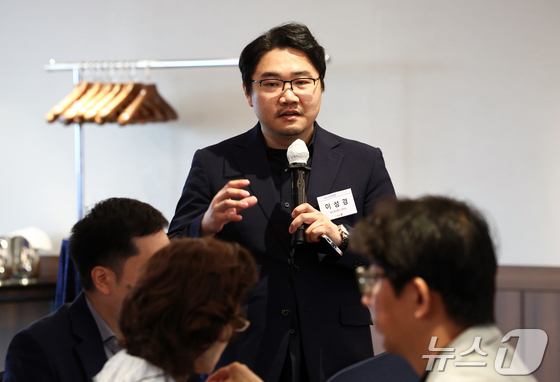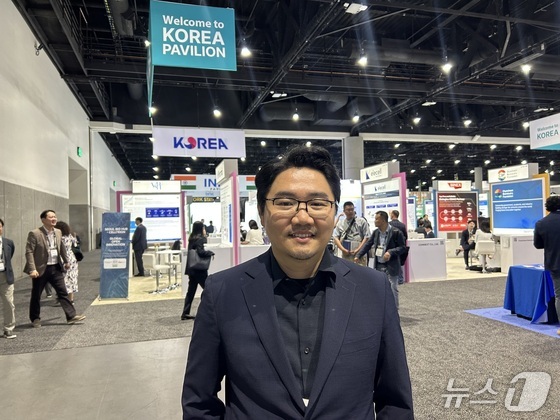
“Successfully completing a clinical trial is not the finish line. Companies also need to create commercial value and generate revenue in the market.”
That’s according to Lee Sung-kyung, center director at JNPMEDI, who told News1 in a recent interview that Korea’s biotech industry must move beyond simply conducting clinical trials and strengthen its global commercialization capabilities.
Founded in July 2020, JNPMEDI is an AI platform-based consulting company specializing in drug and innovative medical device development.
Leveraging extensive expertise in clinical operations and data management, the company provides end-to-end consulting services covering clinical trial design, trial operations, data collection and management, and global regulatory compliance.
Its goal is to support biotech companies throughout their entire growth journey, from startup formation and fundraising to clinical development and global business development.
In particular, JNPMEDI operates an AI-powered system that automatically reviews clinical trial documents and detects errors. The company says the platform improves operational efficiency through an intuitive user interface while enabling decentralized clinical trials, allowing patients to participate without repeated hospital visits. This helps reduce patient dropout rates and lower clinical trial costs.
“The single biggest cost in clinical trials is ultimately the patient,” Lee said. “In the U.S., managing a single patient can cost tens of thousands of dollars, so minimizing patient attrition is one of the most critical factors for improving the likelihood of success.”
Data management and security are also key competitive advantages for the company.
“You can’t exchange sensitive clinical data through email,” Lee said. “Instead of relying on external services such as Google Drive, we store data on our own cloud platform and provide overseas partners with permission-based access to meet global regulatory requirements.”
Although many Korean companies primarily use Korean-language documentation, Lee said uploading data to JNPMEDI’s proprietary cloud platform makes collaboration with overseas partners significantly more efficient.
Hiring Former FDA Experts: “Design for Global Standards From the Start”
JNPMEDI also offers AI-powered automation services that reduce clinical trial preparation work from more than a year to just a few weeks. The company says this allows biotech firms to seize investor meetings and business development opportunities without lengthy delays.
Lee emphasized that biotech companies must establish strong scientific evidence during the preclinical stage.
“Entering a Phase 1 clinical trial without thoroughly validating the mechanism of action (MOA) and underlying science is not advisable,” he said. “Securing funding for Phase 2 trials ultimately depends on having robust preclinical data.”
The company is also investing in talent to strengthen its global competitiveness. In 2024, JNPMEDI recruited Kwak Soo-young, a former U.S. Food and Drug Administration (FDA) regulatory expert, as a director.
“Korea has grown to the point where global regulatory experts are now coming here to work,” Lee said. “From the beginning, we designed our services for the global market and continue to expand our network with overseas universities and companies.”
He added that Korea’s biotech ecosystem has evolved significantly.
“In the past, many startups were founded by university professors, but thanks to government support, a growing number of companies are now advancing into clinical-stage development,” Lee said. “Around 2030, the global patent cliff will create significant new opportunities as patents for major pharmaceutical products expire.”
“JNPMEDI aims to become a partner that supports biotech companies throughout their entire growth journey—from startup formation and clinical development to commercialization and licensing—using AI and cloud-based technologies,” he added.