

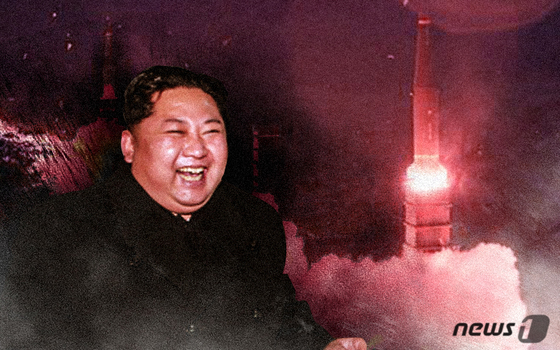
Bruce Bennett, a U.S. military expert, stated on Wednesday that North Korea’s nuclear capabilities are extending beyond a defensive posture. He urged South Korea to break away from its conventional approach to North Korea’s nuclear policy and consider a wider range of scenarios.
Bennett, a senior researcher at the RAND Corporation, made these remarks during the Asan Plenum 2025, held at the Grand Hyatt Seoul in Yongsan District, Seoul.
He referred to a recent assessment by the U.S. Office of the Director of National Intelligence (DNI), which stated that North Korea is ready to conduct additional nuclear tests at any time. According to Bennett, this indicates that Pyongyang may not only use nuclear weapons for defense but could also consider using them on the Korean Peninsula if it deems necessary. He advised that South Korea prepare for a range of contingencies in light of North Korea’s enhanced nuclear capabilities.
John Everard, former British ambassador to North Korea, also commented that while the likelihood of North Korea using nuclear weapons against South Korea is very low, it is not zero. Given that South Korea holds an overwhelming advantage in conventional weaponry, he said Pyongyang may contemplate deploying its advanced nuclear arsenal.
Former ROK-US Combined Forces Command Deputy Commander Ahn Byung-suk acknowledged doubts surrounding the effectiveness of extended deterrence. He suggested that the Combined Nuclear and Conventional Integration (CNI) between South Korea and the U.S. should be more visibly developed first. After that, further options such as redeploying tactical nuclear weapons should be gradually considered.
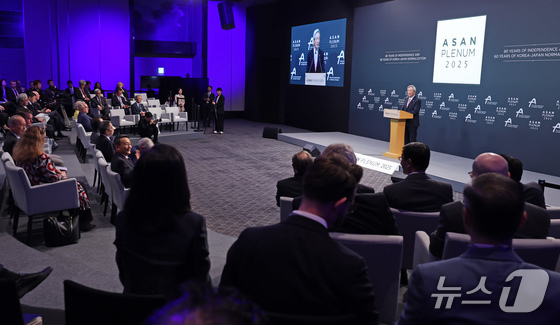
Former Japanese Vice Minister for Foreign Affairs Mitoji Yabunaka remarked that even in Japan, there is a growing realization that enhancing nuclear deterrence cannot rely solely on its partnership with the U.S. He added that while nuclear armament used to be a taboo subject in Japan, it is now slowly being discussed.
Former South Korean Vice Minister of National Defense Shin Beomchul also pointed out the weakening of South Korea’s deterrent posture.
Shin specifically highlighted concerns about South Korea being sidelined in U.S.-North Korea dialogue. He asserted that even if former President Donald Trump and Kim Jong Un meet again, the U.S. and South Korea should first engage in talks and reach agreements. For instance, if Washington and Pyongyang enter nuclear arms reduction talks, the U.S. should ensure South Korea’s deterrence by guaranteeing tactical nuclear weapons or providing submarine-launched cruise missiles (SLCMs).
Debates also emerged regarding China’s advancing nuclear capabilities.
Zhu Feng, a professor at Nanjing University in China, argued that unless provoked first, the chances of North Korea launching a nuclear attack are extremely low. If a nuclear provocation were to occur, he asserted, China would immediately side with South Korea.
In response, Yabunaka pointed out that while China often claims to play a major role in stabilizing the Korean Peninsula, it continues to expand its nuclear arsenal and maintain ties with both Russia and North Korea.
Zhu countered that South Korea is China’s sixth-largest trading partner, and thus any damage to South Korea would significantly affect China as well. He claimed China is striving to maintain geopolitical balance and drew a clear line by distancing itself when Vladimir Putin and Kim Jong Un strengthened their ties, asserting that China remains committed to peace on the Korean Peninsula.