

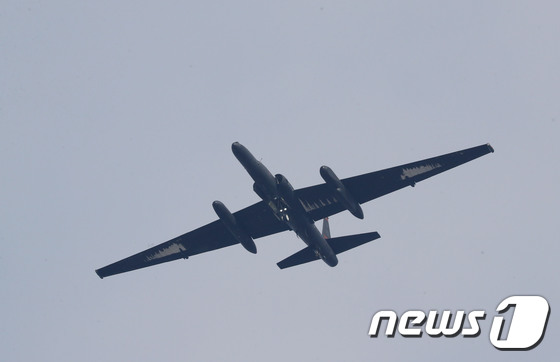
On July 31, a near-miss incident occurred in the northern border region of South Korea when our military almost intercepted a U.S. drone, mistaking it for a North Korean unmanned aerial vehicle. The situation, confirmed on Monday, arose from a lack of awareness about specific training details among U.S. and South Korean personnel, who attempted to resolve the issue through unofficial channels, nearly resulting in a major incident.
A Joint Chiefs of Staff (JCS) spokesperson informed reporters that day that the readiness inspection revealed that airspace control procedures were compromised due to communication breakdowns among personnel.
The official explained that the root causes were identified as a failure in the South Korean military’s chain-of-command reporting system and the U.S.-Republic of Korea (ROK) personnel’s non-adherence to formal special airspace flight authorization procedures, relying instead on customary practices.
The U.S. military failed to adequately communicate the specialized nature of the high-altitude drone training to their South Korean counterparts. Consequently, ROK personnel misinterpreted it as routine training, neglecting to report up the chain of command. Notably, both U.S. and ROK personnel conducted official business, which should have followed proper protocols, solely via text messages. This incident appears to stem from systemic operational failures between the two allies.
Just one day prior to the special training, the U.S. side sent a routine text notification. A U.S. Eighth Army liaison officer texted a South Korean Army I Corps staffer on July 29, mentioning an additional drone mission. However, the message omitted crucial details about the drone’s flight altitude. It’s likely that the U.S. Eighth Army liaison was unaware of the Marine Corps’ plans for their first high-altitude drone flight.
The South Korean officer who received the message confirmed its content and replied in Korean that there were no restrictions. This officer also assumed the U.S. Marine Corps drone training was a standard low-altitude exercise, failing to report it up the chain of command or inform relevant units.
Drone operations require adherence to established approval procedures based on flight altitude and airspace. While approval for typical operations can be obtained from relevant units, high-altitude drone flights necessitate clearance from the Air Force Operations Command. U.S. forces can request such approvals through channels like the Seventh or Eighth Air Force.
However, the U.S. personnel involved in this training failed to effectively communicate to their South Korean counterparts that this was the drone’s first high-altitude flight exercise. The text message from U.S. Eighth Army personnel to I Corps omitted any mention of the drone’s altitude. As a result, I Corps personnel assumed it was a routine low-altitude flight exercise, similar to previous joint U.S.-ROK Marine Corps training at the site.
A JCS official stated that there had never been flights exceeding the standard altitude near that firing range before. This was unprecedented. He explained that since all previous flights were low-altitude, personnel assumed this was similar and didn’t report it.
However, military protocol dictates that even low-altitude drone training should be reported up the chain of command. The I Corps personnel’s decision not to report it, believing it to be routine, could be a procedural error. It also raises concerns about possible directives from I Corps command to forgo reporting on routine training, indicating a potential breakdown in discipline.
A military official emphasized that regardless of altitude, drone operations require adherence to established procedures. The official further noted the breakdown in the command reporting structure and the failure of U.S.-ROK cooperative airspace control operations.
Evidence suggests that the U.S. military may have been neglecting official approval processes for an extended period.
The U.S. military’s oversight is evident on multiple fronts, particularly in their failure to follow proper approval procedures for high-altitude drone flights.
A JCS official stated that the U.S. side’s last-minute text notification and their failure to contact the unit authorized to approve high-altitude flights, instead only reaching out to I Corps, indicates a clear violation of procedures. The U.S. military should have adhered to official protocols.
The official procedures referenced by the military suggest that the U.S. forces should have submitted formal documentation for high-altitude drone flights through established administrative channels, rather than relying on text messages. It appears likely that the U.S. Eighth Army liaison officer was unfamiliar with the proper procedures, leading to this incident.
As a result of these compounded issues, the U.S. military drone flew over the border area without proper flight clearance from South Korean authorities. I Corps, unaware of the situation, misidentified it as an unidentified flying object, triggering a response similar to a North Korean drone incursion – a potentially dangerous scenario.
In response to this incident, the JCS plans to overhaul U.S.-ROK airspace control and flight approval procedures, as well as inter-personnel communication and reporting systems.
A JCS official concluded that this incident underscores the critical need for strict adherence to established U.S.-ROK airspace control procedures. Moving forward, it will enhance the cooperative airspace control operations through improved communication between U.S. and ROK forces.