

Samsung Biologics is set to secure future growth in its global contract development and manufacturing organization (CDMO) business through a capital increase of about 3 trillion KRW (about 2.18 billion USD).
The company aims to expand both its business portfolio and production capacity by investing in the acquisition of global peptide CDMO firm Polypeptide Group and expanding its second bio campus in Songdo, Incheon.
On Friday, Samsung Biologics announced plans to raise a total of 3.09 trillion KRW (about 2.24 billion USD) through this capital increase. Of the funds raised, 2.7062 trillion KRW (about 1.96 billion USD) will go towards acquiring Polypeptide Group, while 294.8 billion KRW (about 214 million USD) will fund the expansion of the second bio campus.
Samsung Biologics had previously decided to acquire Polypeptide Group on July 17 for 1.46 billion CHF (about 1.81 billion USD). This acquisition will allow Samsung Biologics to add the peptide sector to its existing CDMO business, which currently focuses on antibody drugs.
Peptides bridge the gap between synthetic drugs and antibody drugs. They’re larger than typical synthetic drugs but much smaller than antibodies. Their ability to selectively bind to targets allows for strong effects while penetrating tissues more easily than antibodies.
Peptides have recently become a focal point in the global biotech industry, particularly with the booming market for obesity and diabetes treatments. The success of glucagon-like peptide-1 (GLP-1) drugs, such as Novo Nordisk’s Wegovy and Eli Lilly’s Zepbound, has led to a surge in demand for peptide drug production.
According to Polypeptide Group, the global peptide drug market is projected to grow from about 94 billion USD last year to 200 billion USD by 2031, with an annual growth rate of 13.4%.
Polypeptide Group is a peptide-specialized CDMO with six locations across five countries, including its Swiss headquarters and sites in the U.S., Europe, and India. Samsung Biologics plans to leverage Polypeptide Group’s global production and business base to enter the peptide CDMO market, expanding its portfolio beyond antibody drugs to include messenger RNA (mRNA) and antibody-drug conjugates (ADCs).
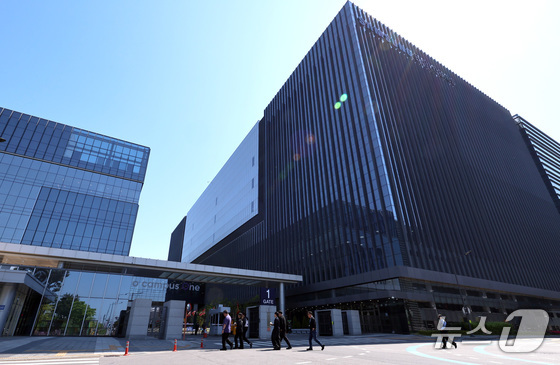
Alongside this expansion, Samsung Biologics is boosting its production capacity. The company is developing its second bio campus in Songdo, where it plans to add five to eight production facilities, aiming for a total production capacity of 720,000 liters.
Currently, Samsung Biologics has a global production capacity of 785,000 liters. If the second bio campus expansion proceeds as planned, the total production capacity will increase to 1,385,000 liters. The company aims to maintain its competitive edge in the global CDMO market with these large-scale production facilities.
This capital increase will be conducted through a rights offering, ensuring existing shareholders have the opportunity to participate. As per capital market regulations, 20% will be allocated to the employee stock ownership association, with the remaining 80% offered to existing shareholders as subscription rights.
Pursuing Shareholder Value Protection Through a Rights Offering Followed by a Public Offering of Unsubscribed Shares
The allocation ratio for new shares will be 0.0392737657 shares per existing share, granting one subscription right for every 26 shares held. Shareholders can trade these rights after listing, allowing those who don’t wish to subscribe to sell their rights.
Any unsubscribed shares will be offered to the public, with joint lead underwriters acquiring any remaining shares.
Samsung Biologics emphasized that this capital increase represents only about 5% of total issued shares. This is lower than the 18.9% average for rights offerings exceeding 1 trillion KRW (about 725 million USD) among domestic listed companies over the past five years, and also lower than the company’s 7.6% increase in 2022.
In essence, this capital increase reflects Samsung Biologics’ strategy to expand its large-scale antibody CDMO business into peptides while securing long-term growth through increased production capacity.
John Rim, Chief Executive Officer (CEO) of Samsung Biologics, stated that it initiated this capital increase to lay the groundwork for becoming a top-tier global CDMO. It’s committed to steadily expanding the three pillars, including the Polypeptide Group acquisition and second bio campus development, to enhance the corporate value.