South Korea’s skin beauty medical device companies are experiencing continued growth, primarily in overseas markets. The K-beauty trend, which originated in cosmetics, has now expanded into medical devices. As these companies broaden their sales territories to include the U.S., Europe, and Latin America, the focus of their performance growth is shifting from the domestic market to international markets.
Industry reports from Friday indicate that overseas business performance has emerged as a key factor in the first-half results of major domestic skin beauty medical device companies this year.
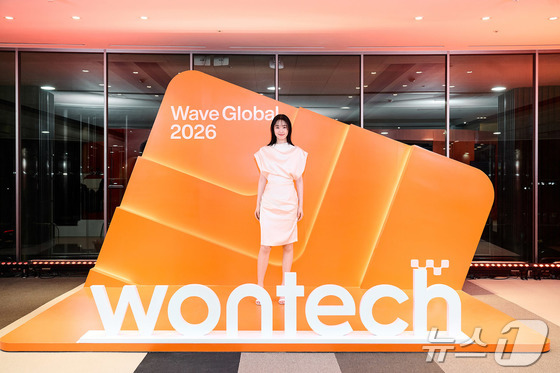
For example, Wontech reported consolidated sales of 87.7 billion KRW (approximately 63.7 million USD) in the first half of this year. This represents a 13.6% increase from 77.2 billion KRW (about 56 million USD) in the same period last year, setting a record for the highest first-half sales. Second-quarter sales reached 47.5 billion KRW (around 34.5 million USD), a 19.3% increase year-over-year, breaking the quarterly sales record.
A notable aspect of Wontech’s growth is its overseas sales proportion. In the first half, overseas sales reached 65.7 billion KRW (about 47.7 million USD), a 21.5% increase from the same period last year, accounting for 74.9% of total sales. Particularly, U.S. sales for the second quarter surged by 127.4% compared to the previous year. Sales also increased in Asia, Europe, the Middle East, and South America.
Wontech is expanding its overseas market with high-frequency medical devices like Oligio and laser medical devices such as Lavieen. The company’s strategy involves establishing product recognition domestically before expanding sales channels to overseas hospitals and clinics, thereby boosting both equipment and consumable sales.
Another player, Classys, reported second-quarter sales of 105.5 billion KRW (approximately 76.6 million USD), marking the first time its quarterly sales surpassed 100 billion KRW (about 72.6 million USD). The company achieved an operating profit of 43.9 billion KRW (around 31.9 million USD), reflecting increases of 26.7% and 2.2% respectively, compared to the previous year. Its operating profit margin reached an impressive 41.6%.
Classys also experienced growth driven by its overseas business. In the second quarter, overseas sales based on existing operations totaled 68.1 billion KRW (about 49.5 million USD), a 27.6% increase from the previous year, while domestic sales fell to 22.3 billion KRW (around 16.2 million USD), a decrease of 25.3%. Overseas equipment sales rose by 26.5% to 41.6 billion KRW (approximately 30.2 million USD).
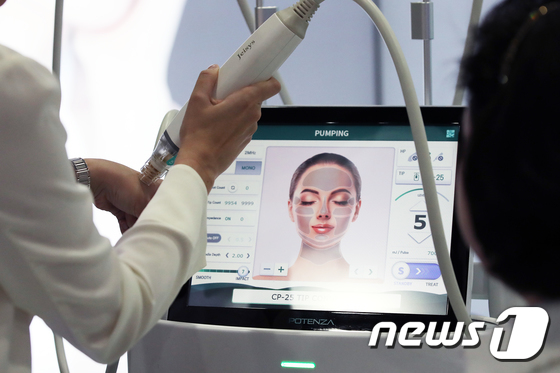
The performance of Wontech and Classys indicates a shift in the growth dynamics of the domestic skin beauty medical device market. Historically, sales of equipment to domestic hospitals and clinics formed the mainstay of performance. Recently, however, the focus has shifted to installing equipment overseas and repeatedly selling consumables like cartridges.
Notably, skin beauty medical devices offer relatively easy access for procedures and competitive equipment pricing, which has facilitated the international expansion of Korean companies alongside the K-beauty trend. Domestic firms are also increasing their market presence in countries with high demand for beauty treatments, such as Brazil and Thailand, in addition to advanced markets like the U.S. and Europe.
The speed at which overseas sales grow, along with securing local certifications, distribution networks, and stable sales of consumables post-equipment sales, will likely determine the quality of future performance.
An industry insider stated that in the future, competition in the domestic skin beauty medical device market will hinge not just on equipment sales volume, but on how well companies can establish a repeatable revenue structure that includes global equipment installations, consumable sales, and resale of new products.